Intensive Care at Home: What Does It Cost?
· Igor Savitsky
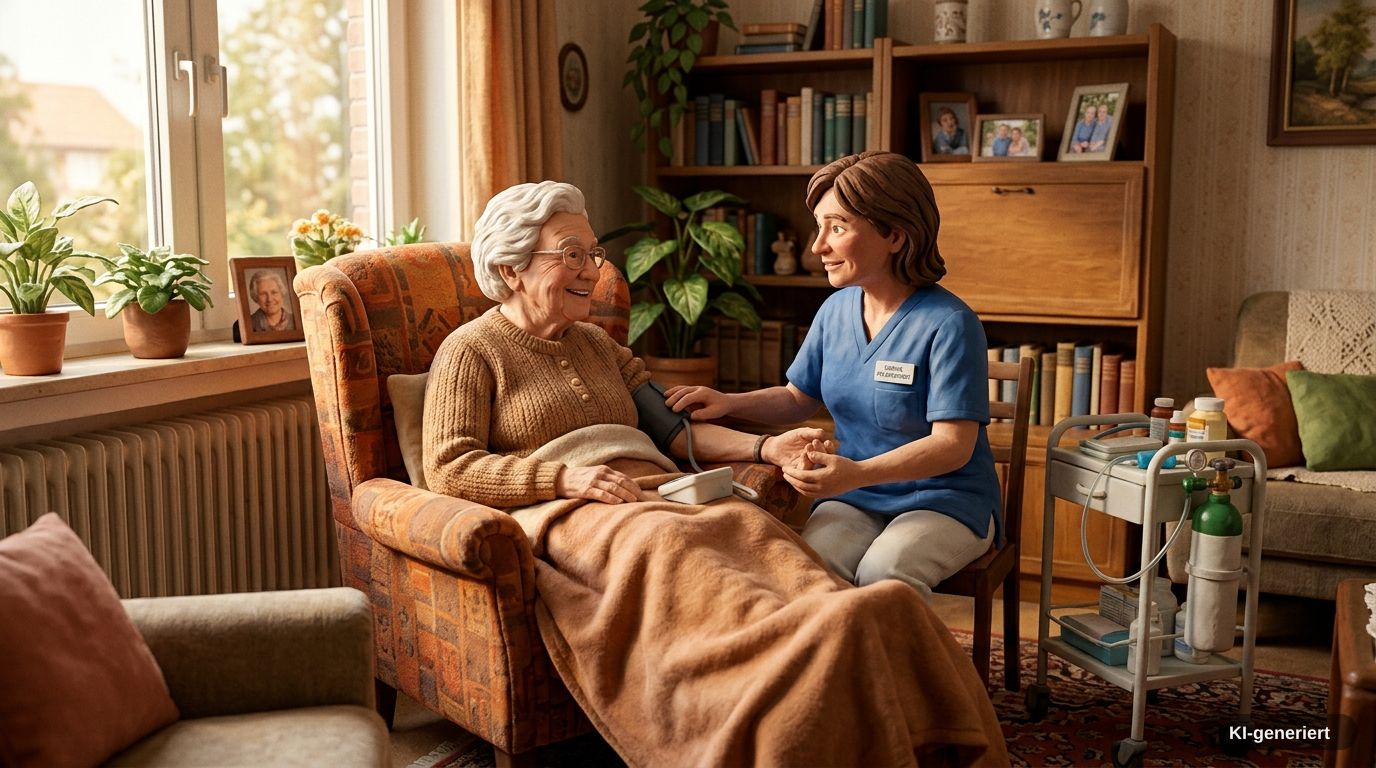
Your relative needs intensive care, preferably at home, and you wonder whether it is even affordable. Many families ask themselves this question. The good news: statutory health insurance covers a large part of the costs. But there are details you should know before you sign a contract.
What does home ventilation care actually mean?
Home ventilation care, also called out-of-hospital intensive care (außerklinische Intensivpflege), is intended for people who permanently or temporarily depend on a ventilator, have a tracheostomy and, according to a medical prescription, generally have intensive care status. This can be the case after a severe stroke, with an advanced neuromuscular disease, after an accident causing paraplegia, or with chronic lung disease.
The difference from normal outpatient care: the nursing staff can provide support at home for up to 24 hours on site. Partial care is also possible if you, as a relative, would like to take over part of the care. Another essential difference is that the nursing staff must be qualified for intensive care measures. This means qualified nurses, often with specialist training in anaesthesia and intensive care, or at least a basic course in out-of-hospital intensive care (außerklinische Intensivpflege). This specialisation costs money, and significantly more than a standard care hour.
What does the health insurance fund (Krankenkasse) pay and what does it not?
Since the Intensive Care and Rehabilitation Strengthening Act (IPREG) of 2020, the legal situation has become more specific. Statutory health insurance covers the costs of home ventilation care if a medical certificate is available and the need is classified as medically necessary.
In practice, it works like this: the fund approves a daily quota of hours, which is provided by an approved intensive care service. For 24-hour care with ventilation, the gross costs can quickly be between 15,000 and 25,000 euros per month. The fund pays on the basis of negotiated prices with approved services; it bears the recognised share, not automatically everything.
This is where the decisive difference in costs lies between care at home and care in a so-called shared residence: what is generally not covered by the funds is often: accommodation costs, i.e. rent, which you generally have to finance yourself, or possibly special aids that are not in the list of approved aids. In a home setting, rent does not apply, and you even have a claim to a budget for home adaptation for optimal and self-determined care at home.
Long-term care insurance fund (Pflegekasse), care level (Pflegegrad) and personal contribution: how they work together
In parallel to health insurance, the long-term care insurance fund (Pflegekasse) provides benefits. People receiving home ventilation care almost always have care level (Pflegegrad) 4 or 5. With care level (Pflegegrad) 5, up to 2,200 euros in care benefits in kind are available per month for outpatient care. This money goes directly to the care service and reduces your personal contribution.
In addition: if you, as a relative, help with care yourself, you can receive care allowance or so-called combination care. With care level (Pflegegrad) 5, this is currently around 946 euros per month. With a combination of a care service and your own involvement, there are proportional amounts from both pots.
What remains as a personal contribution? That depends heavily on the specific scope of services. Not infrequently, a gap of a few hundred to a few thousand euros remains, which the family or the social welfare office must bear. The social welfare office can step in as a secondary payer if personal funds are insufficient. When signing the contract, pay attention to any possible personal contribution within the care provision. There are differences between individual care services.
Home adaptation and aids: further cost items
Ventilation at home often requires adaptations: wider doors for wheelchairs, a care bed, suction devices, ventilation masks, consumables. Many of these aids are supplied by the health insurance fund (Krankenkasse) on prescription. Keyword: the list of approved aids of the statutory health insurers. For home adaptations, the long-term care insurance fund (Pflegekasse) provides a subsidy of up to 4,000 euros per measure, and up to 16,000 euros if several people in need of care live in one home.
Important: always have aids approved before purchase. If you buy them yourself without approval, you pay yourself. The care service or a good medical supply store in the region knows the exact procedures and will help you with the application.
How to organise things in Alpen, Wesel and the Lower Rhine
The first step is always the medical prescription. The family doctor or specialist issues a prescription for out-of-hospital intensive care (außerklinische Intensivpflege). This goes to the health insurance fund (Krankenkasse), which then sends a Medical Service (MD) for assessment.
In parallel, you apply for the care level (Pflegegrad) from the long-term care insurance fund (Pflegekasse). For both you need patience, as processing can take weeks. In urgent cases, there are transitional arrangements.
Then comes the choice of care service. Make sure the service is approved specifically for out-of-hospital intensive care (außerklinische Intensivpflege). Not every outpatient service is! In Alpen and the Lower Rhine region, including towards Rheinberg, Moers or Kamp-Lintfort, there are specialised providers. Ask specifically about the qualifications of the staff and whether qualified nurses are on site around the clock, not just on call.
- Obtain a medical prescription for out-of-hospital intensive care (außerklinische Intensivpflege)
- Apply for the care level (Pflegegrad) from the long-term care insurance fund (Pflegekasse) (care level 4 or 5 likely)
- Wait for approval from the health insurance fund (Krankenkasse) or file an objection if it is rejected
- Choose a specialised intensive care service with statutory health insurance approval
- Apply separately for home adaptations and aids
- Contact the social welfare office of the Wesel district if gaps arise in the budget
What to do if the fund rejects the application?
A rejection is not the last word. You have the right to file an objection within one month. Support is worthwhile for an objection: the VdK or the Sozialverband Deutschland (SoVD) have advice centres in the Wesel region and often help free of charge. A specialist lawyer for social law can also make sense, especially when large amounts are involved.
Important: read the rejection notice carefully. Often only a form or a medical justification is missing. This can be submitted quickly.
Are you planning intensive care at home in Alpen or the Lower Rhine region and don't know where to start? We help you keep track, submit the right applications and organise care that really works. Just call us or write to us briefly.
Frequently asked questions
Does the health insurance fund (Krankenkasse) pay for all home ventilation care?
The health insurance fund (Krankenkasse) covers the medically necessary care services on the basis of negotiated hourly rates. Whether this fully covers the actual costs depends on the care service and the individual need. In addition, the long-term care insurance fund (Pflegekasse) pays benefits in kind depending on the care level (Pflegegrad). Any gaps that arise may be covered by the social welfare office.
How long does approval for out-of-hospital intensive care (außerklinische Intensivpflege) take?
Processing takes between two and six weeks depending on the fund. In urgent cases, an approval can be deemed granted if the fund does not respond in time. Ask your fund or a social association about the exact deadlines.
Can relatives provide the intensive care themselves?
Relatives can take over parts of the care, but not the specialist ventilation care tasks. These require qualified, certified professional staff with the appropriate qualification. Relatives can apply for care allowance if they actively help in addition to professional care.
What happens if the money for intensive care is not enough?
If the health insurance fund (Krankenkasse) and the long-term care insurance fund (Pflegekasse) do not cover all costs and personal funds are lacking, the social welfare office in the district of Wesel can step in as a secondary payer. For this, an application for assistance with care under SGB XII must be submitted. A consultation at the social welfare office or the VdK quickly clarifies whether this is an option.